
This Forgotten Album Featured Some of John Lennon’s Rawest, Most Honest Moments
The unjustly overlooked Menlove Ave. represents some of the best of what John Lennon produced between Imagine and Double Fantasy. You just had to skip ahead to side two of this collection of mid-'70s-era odds and ends.
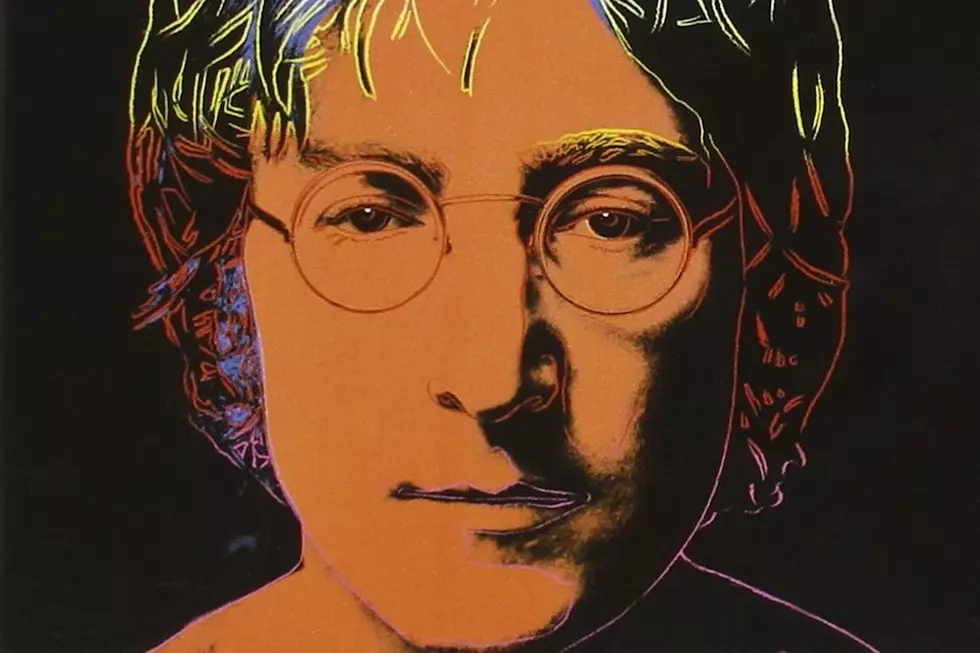
Probably most famous now for its Andy Warhol-produced cover, Menlove Ave. arrived on Nov. 3, 1986, as the third posthumous album overseen by Lennon's widow Yoko Ono – following 1984's Milk and Honey and 1986's Live in New York City. Unlike those two previous projects, however, she'd originally had little to do with these sessions, which largely took place during Lennon's infamous Lost Weekend apart from Ono.
Her care in constructing Menlove Ave. went beyond that iconic album image. The name itself recalled Lennon's childhood home at 251 Menlove Ave. in Liverpool, a '30s-era duplex called "Mendips" where the Beatles first rehearsed. "Mendips always meant a great deal to John," Ono later told the San Diego Union-Tribune, "and it was where his childhood dreams came true for himself and for the world."
Listen to John Lennon’s ‘Steel and Glass’
John Lennon's 'Menlove Ave.' Returned to a Troubled Era
The genesis of these songs was, more often than not, a turbulent era when Lennon battled his producer Phil Spector and his own demons. Rock 'n' Roll, an ill-fated 1975 attempt to reconnect with Lennon's roots, went awry when he and Spector clashed. The sometimes-claustrophobic Walls and Bridges was nearly relegated to curio status because of similarly Spector-esque studio missteps.
Beneath all of these excesses, Lennon actually did some of his best-ever singing. That gives power and lift to the occasionally flawed Menlove Ave., which ultimately served as both a powerful reminder of what went wrong and a glimpse into what might have been.
READ MORE: The Very Best Beatles Live Albums
Side one could be a bit of a mess, since it was dominated by a series of unretouched outtakes from Lennon's scrapped Rock 'n' Roll sessions with Spector. The notable exception was "Rock and Roll People," a blessedly more stripped-down production from the Mind Games era. (Johnny Winter released his own version as part of John Dawson Winter III in 1974.)
"Here We Go Again," another unreleased item co-written by Spector, was both wildly overwrought and instantly forgettable. "Since My Baby Left Me" offered a moment of insight, but only because it so perfectly echoed this period's booze-drenched after-party ethos. The cover of "Angel Baby" was a delightful little aside, though hardly essential.
Listen to John Lennon’s ‘Angel Baby’
How 'Menlove Ave.' Reclaimed Lost John Lennon Treasures
Ono, in the original album liner notes, gamely tried to connect these sounds to Lennon's youth. "As a child, John was brought up by Aunt Mimi and Uncle George in their home on Menlove Avenue in Liverpool. In 1956, when John was 16, Elvis Presley happened as a worldwide phenomenon. It changed John's life.
"John's American rock roots – Elvis, Fats Domino, and Phil Spector are evident in these tracks," Ono continued. "But what I hear in John's voice are the other roots of the boy who grew up in Liverpool, listening to Greensleeves, BBC Radio and Tessie O'Shea."
READ MORE: How the B-52's Brought John Lennon Back to Music
An increasingly unhinged Spector eventually absconded with the tapes for Rock 'n' Roll, forcing Lennon to start over on the project. Frustrated, he turned his attentions instead to new music, recording a series of raw versions of songs in mid-1974 that would later undergo weeks of studio lathering before being released as Walls and Bridges.
A little over a decade later, side two of Menlove Ave. fixed that, and Lennon – finally freed of these period-piece additions – sounds like his old self again.
Listen to John Lennon’s ‘Nobody Loves You (When You're Down and Out)’
Why Was John Lennon's 'Menlove Ave.' Forgotten?
The bare-boned takes on "Steel and Glass" and "Scared" cut with a sharpened edge, while "Old Dirt Road" and "Nobody Loves You" ached with spiraling new emotion. Lennon's sense of raw honesty, a hallmark of his best earlier work, was restored. Just as interestingly, the rehearsals drew a straight line toward the clean, more direct rock that Lennon emerged with after a five-year hiatus as a househusband.
Sadly, Menlove Ave. arrived in a time perhaps too far removed from the nostalgia of his tragic 1980 death, to say nothing of an MTV-driven onslaught of synthpop. The album stalled at a paltry No. 127 in the U.S., and failed to chart at all in Lennon's native U.K.
READ MORE: 20 Beatles Songs That John Lennon Hated
In time, a smattering of its songs appeared elsewhere – on a 2004 reissue of Rock 'n' Roll, and as part of collections like 2006's The U.S. vs. John Lennon and 2010's Gimme Some Truth. By then, Menlove Ave. had been long out of print; it wasn't even made available when the rest of Lennon's catalog finally arrived on streaming services.
Ono never forgot about Lennon's childhood home, however, later purchasing 251 Menlove Ave. in 2002. She then donated it to the National Trust, which also serves as a protecting agency for former Beatles bandmate Paul McCartney's childhood home at 20 Forthlin Road. Both have since been granted a Grade 2 listing, meaning they cannot be altered without governmental approval.
The Best Song From Every John Lennon Album
Gallery Credit: Michael Gallucci
See John Lennon in Rock’s Craziest Conspiracy Theories

More From KKTX FM